
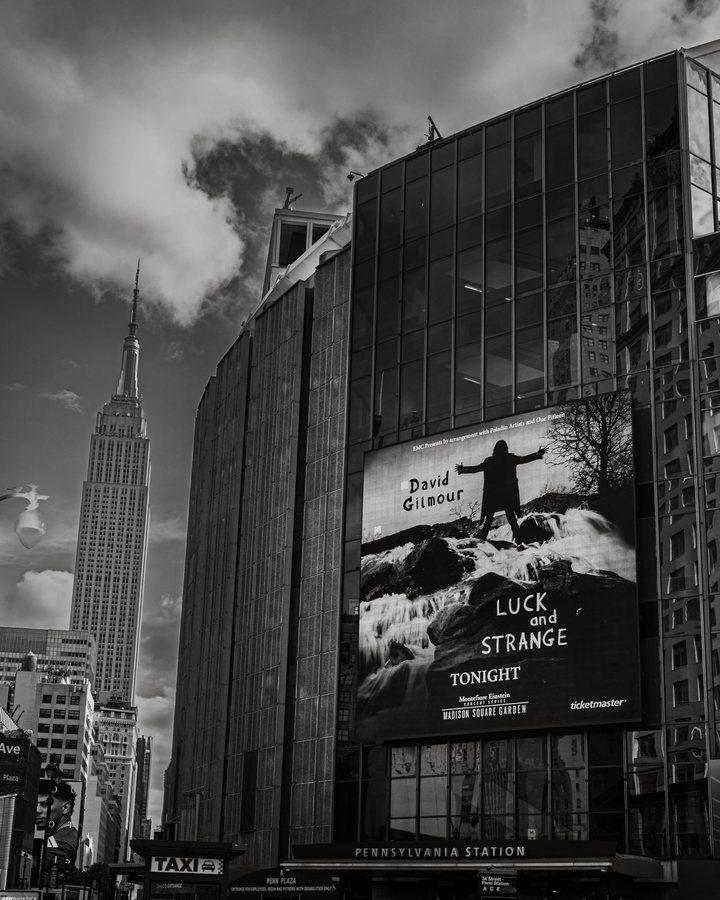
David Gilmour: Luck and Strange
The brief
David Gilmour had not played the United States in eight years. That gap is the whole story. It creates enormous latent demand and it also means none of that demand is measurable, reachable, or yours. A legacy artist returning after nearly a decade does not arrive with a warm list attached.
The job was to find that audience, prove it existed, and convert it across three very different markets and venue partners, with the album Luck and Strange as the creative spine.
What MCC did
We ran a registration-first funnel. Before a single ticket went on sale we captured demand directly, which turned an unknown audience into a list we could sequence against and gave the venue partners hard evidence of interest ahead of the on-sale.
From there the campaign moved in order: announce, artist presale, then general on-sale. Each phase spoke to a warmer audience than the one before it. Paid social, search, and programmatic carried the weight between phases, with spend shifted by market as the pacing data came in.
Creative stayed aligned to the album throughout, so the campaign read as an artistic return rather than a routine tour announcement.
The result
Five sold-out nights at Madison Square Garden. Three sold-out nights at the Hollywood Bowl. A filled Intuit Dome.
The registration list built before the announce is what made the on-sales open hot instead of cold, and it remains an asset beyond this tour.
“If you’re running a major tour or flagship event, MCC is the team you want in your corner.”John Harper, Promoter

Let’s fill the room.
Whether it’s a tour, a festival, a venue season, or a single sold-out night, let’s talk about what bold looks like for your next campaign.